Colorless Green Ideas Sleep Furiously

One of the bigger difficulties I’ve had with mental health medicine is, a good bit of the time I have no idea what those providing me advice and direction mean when they say things. Part of this is due to pop-psychology appropriating terminology and misusing it to the point of meaninglessness, and part of this is due to a large cognitive blind spot that seems to prevent me from parsing certain concepts.

I think the concept I have struggled most with, both in terms of time spent and results (or lack thereof) achieved, is the idea of “focus on the positive”. This has never made sense to me on what I think is a very basic level. All the words are common English words, the sentence is grammatically correct1, and yet I cannot figure out how it is supposed to be applied in the real world. It may as well be the sentence I stole to be the title of this post2. Or, more accurately maybe, its like looking at an Escher print. At a glance, everything looks okay but if someone told you to replicate it in three dimensions, you’d be hard pressed.

My trouble with the concept is not acknowledging the brief moments of happiness and joy that flit by occasionally, it’s with giving what I see as undue value and significance to them. I kind of see it like this3 – on one side of a balance scale, you have the core of a neutron star4. On the other side you have a pebble5. I have been assured that focusing on how much lighter the neutron star feels now that there is a pebble on the other side is the path to healing. I think my difficulty understanding how this is supposed to work in the real world is fairly self-evident.

Coming at this from a sightly different angle, my MHP has pointed out that I have a strong pattern of black-and-white thinking. Not a lot of grey area. Things are either all bad or not bad at all. If things are bad, they’ve always been bad. I can’t really disagree with him on this. Additionally, I have noticed in myself a tendency to rely heavily on avoidance and denial as coping mechanisms. These two traits combined, I think, explain the difficulty I have with the concept of “focus on the positive”. The pebble doesn’t fix the problem, and if you acknowledge the existence of the neutron star, then it’s there and you have to do something about it.

The trick, apparently, is learning to acknowledge the existence of the neutron star, while simultaneously being grateful for the pebble, even if it’s effect is negligible.

I’m not there yet.

Edited to add – The other difficulty I have with focusing on the positive is the challenge of being on fire and trying to focus on anything other than being on fire, but that’s a different post.


  1. Or, at least its close enough to not interfere with the meaning of the sentence. ↩︎
  2. Colorless green ideas sleep furiously was composed by Noam Chomsky in his 1957 book Syntactic Structures as an example of a sentence that is grammatically well-formed, but semantically nonsensical, demonstrating that language has a structure entirely separate from meaning. ↩︎
  3. I don’t know if these analogies help communicate anything meaningful but it’s the only way I can think of to try explaining what goes on in my alleged brain. ↩︎
  4. The typical neutron star weighs between 1.5 and 2 solar masses. 1 solar mass = 1.9891 x 1030 kilograms. ↩︎
  5. 1 cubic centimeter of pea gravel weighs approximately 1.8 grams ↩︎
Another Clever Title

I never quite know what to do with myself when I’m like this. I know retreating from the world and everything in it is probably not the healthiest option right now but it’s kind of all I want to do.

I believe I mentioned previously, Dr. Psychiatrist is adjusting meds again which always seems to make me a bit unsteady no matter what is being adjusted, or by how much. In this particular instance I switched from just bupropion to a relatively new combo drug approved in 2022 that adds, of all things, dextromethorphan. The theory is the addition of DM will improve my anxiety symptoms. If I don’t have any terrible side effects, I’ll be increasing the dose of DM in a couple weeks.

Whatever the DM is supposed to do I wish it would get on with it. I’m certain I’m not terribly pleasant to be around when I’m this symptomatic and, as I mentioned above, I have increased difficulty doing anything other than sitting and moping.

I hope people will bear with me until I’m tolerable to be around again. Fingers crossed it won’t take too long.

Somewhat More Verbose

Among the happenings over the last year was being denied social security disability benefits. In spite of opinions to the contrary provided by my actual care providers, SSDI felt there was no reason I couldn’t “adapt to other work”. The nature of the “other work” was not specified.

I had tried, over the preceding 16 months or so, to not count on getting disability benefits. I knew it was a long shot, at least the first time around, but I also didn’t have a long-term Plan B. This has not contributed anything to my peace of mind.

The Plan B I was pretending I had, and which I don’t think was really fooling anyone, involved me sucking it up and going back to work. What with my preexisting doubt there is anything really wrong with me in the first place (well documented in previous posts) and social security insisting I could adjust to other work, I tried hard to resign myself to the idea of returning to hospital nursing. Several incidents of greater or lesser significance over the last few months have persuaded me this isn’t realistic, in spite of any protestations I might make to the contrary.

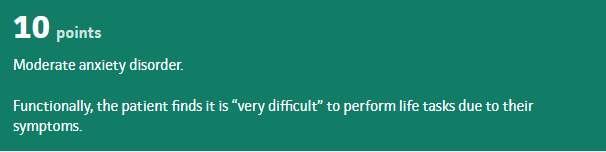
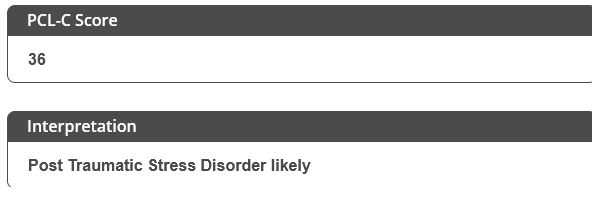
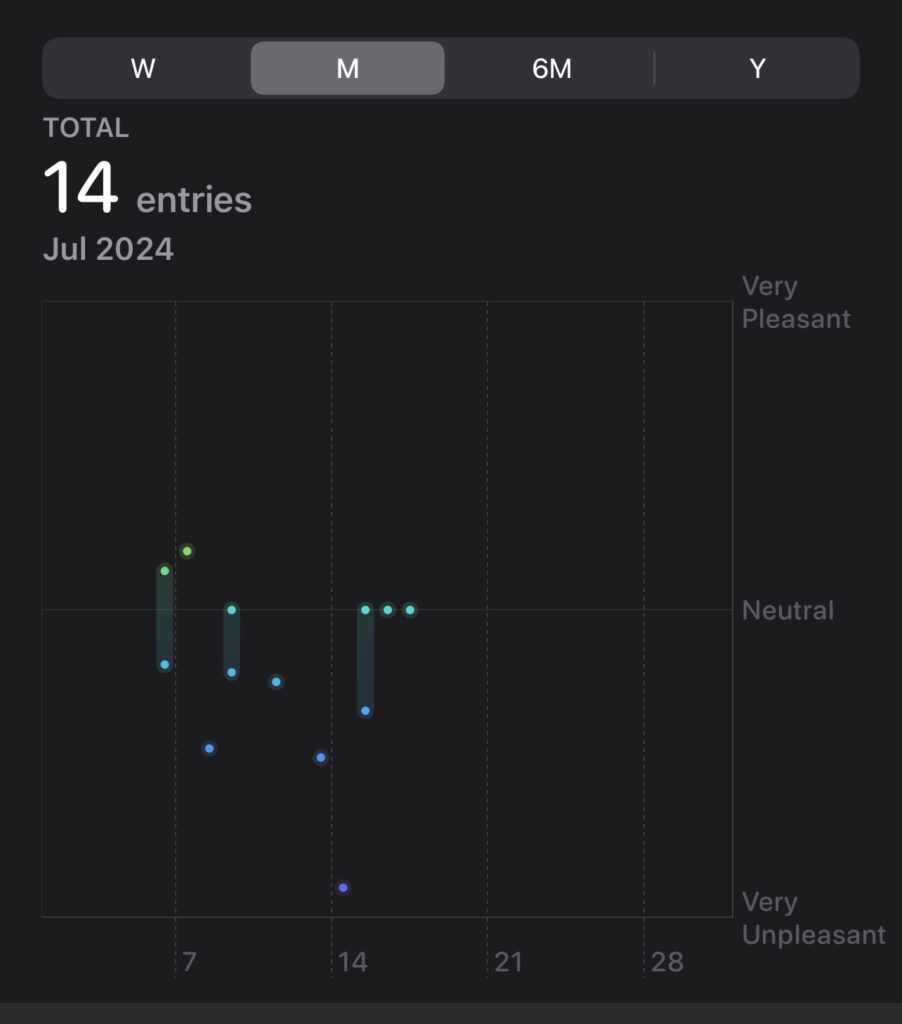
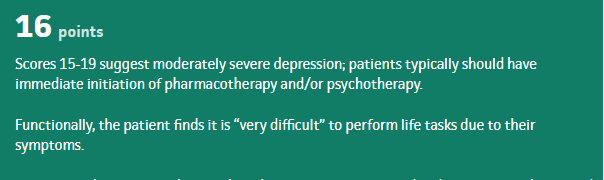
As one might infer from the numbers in the previous post, I remain symptomatic. I still don’t know what to do with myself when panic-brain takes over, which happens much too frequently in spite of everything. Dr. Psychiatrist is still experimenting, trying to find some combination of meds to make me a bit more functional. which is a process I am trying to not get discouraged about as well.

Am I better than I was this time last year? Probably? But certainly not better enough.

Hi Andrew

If anyone is likely to have some sort of RSS or whatever the latest subscription/reader/feed application is on this site, its you. So hi.

My MHP (mental health professional, for those not in the know) suggested I should share more information with the people around me. I have been assured this will be therapeutic for me and appreciated by the people around me. I remain unconvinced on either point, fortunately the chances of anyone actually reading this are negligible so off we go.

Very little has changed since the last post, made over a year ago. Read that one and make of the situation what you will.

My very own To Err is Human

In 2000 the Institute of Medicine published To Err is Human: Building a Safer Health System, a landmark work that shone the light, really for the first time, on the incidence and severity of medical errors. Why do I mention this? Because I’m pretty sure I had one.

As seen in the previous post, for the last few weeks I’ve still been having panic attacks and was quite symptomatic with depression and anxiety which prompted Dr. Primary Care to start me on sertraline. While I was seeing Dr. Primary Care I also got a refill on my bupropion since I was nearly out. I started the newly refilled prescription yesterday and noticed something kind of odd.

I want to take a moment here to mention I am aware of the difficulties and pitfalls of identifying pills by sight. Pills from different manufacturers will look different even if they are the same drug and the same dose. That said, I’ve seen quite a few pills in my day and I can generally spot things that are different because of manufacturer and things that are genuinely off.

So I started my newly refilled prescription and noticed that the new pills were markedly larger than the ones I had previously been taking, in spite of appearing to be from the same manufacturer. By chance I have access to examples of 150 mg XL tablets in addition to the 300 mg XL tablets that I am supposed to be taking and I am as certain as I can be without any physical evidence that the pharmacy filled my last prescription for 300 mg XL with 150 mg XL.

Two additional pieces of evidence that could add weight to the theory; once I started taking my new 300 mg XL tablets I immediately started feeling better. My mind has not been this calm in weeks and my overall mood has improved a great deal. Also when I started taking my new 300 mg XL tablets, I was struck with a serious case of insomnia which is a common side effect of bupropion. It hasn’t really been a problem for me1 except for a couple of days after a dose increase.

There are potentially confounding factors to consider however. As mentioned above, I don’t have any physical evidence. All I have is an empty bottle that says 300 mg XL, and a comparison of my mental image of the pills I was taking to known samples of 150mg and 300mg tablets that appear to be, but can’t be said for certain to have, come from the same manufacturer. There is also the addition of sertraline to my regimen. I’ve been on it for a week and, while usually SSRIs take a bit longer to really take full effect, the possibility that I’m just feeling the benefit of the sertraline cannot be ruled out. Finally, the insomnia could very easily have resulted from me working my first full week on night shift after being on a “sleep when you want, wake up when you want” schedule for a couple months.

Pretty sure but not certain.

The thought of the difficulties I’ve been having with my mood over the past few weeks being the result of a medication error is actually reassuring to me. I was feeling distraught because I thought I’d been making all this progress in therapy and introspection and self-analysis and all, but here I was feeling like shit most of the time again. Additionally, if this was a medication error, any doubt about the benefit of being on medication that I may have had is gone. Being on a half-dose was all kinds of no fun so I don’t even want to think what being off it entirely would be like at this point.


1 I know, I know. But there is my baseline insomnia and then extra insomnia gets piled on top of it. Insomniaception. A couple of days after my last increase in dosage I was back to my baseline insomnia.

Back on the SSRI

Those sertraline girls really knock me out1

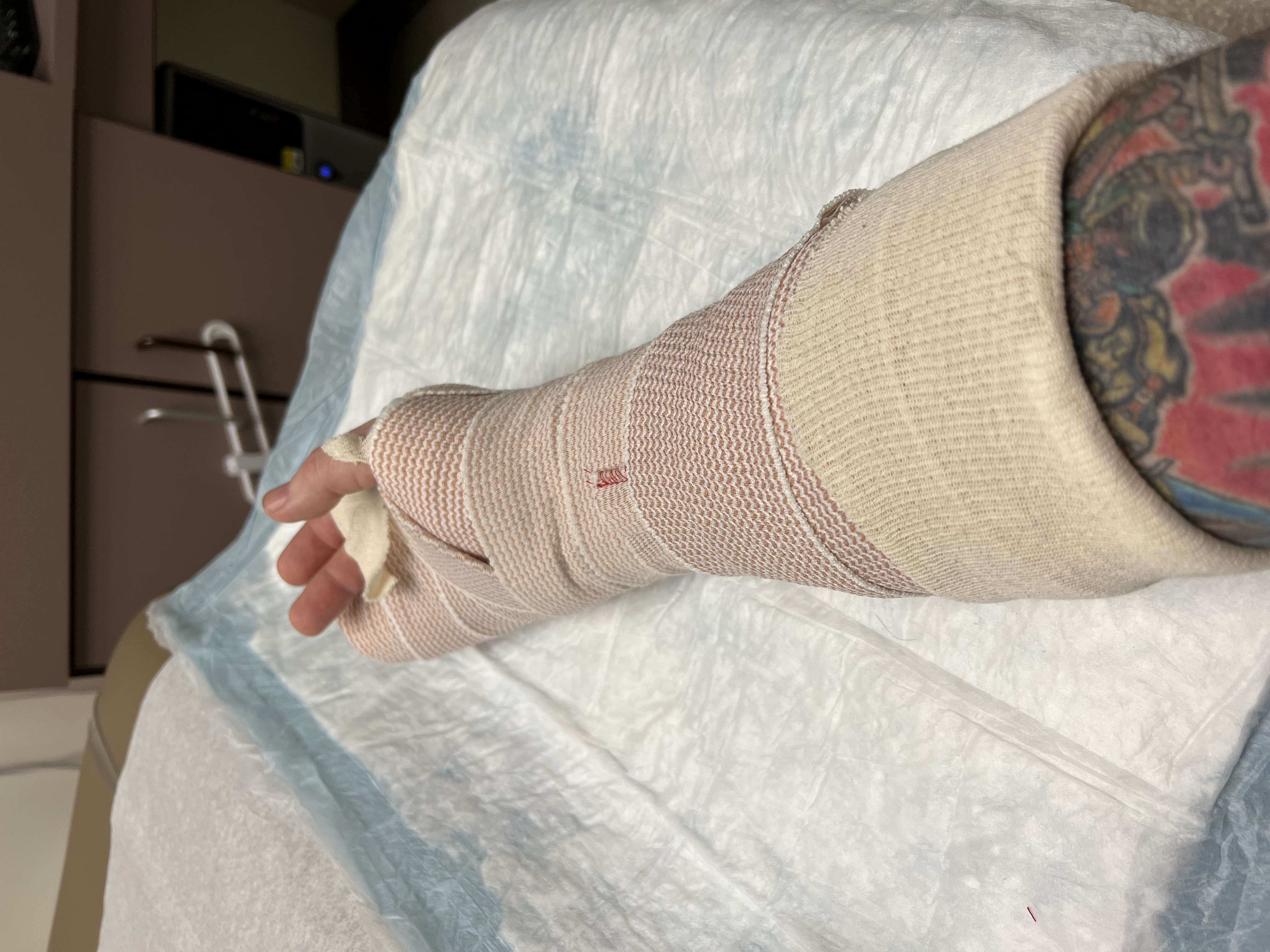
As previously mentioned, I had a cast on my dominant hand for the last few weeks. This condition didn’t make typing or writing impossible but it did make both activities more frustrating than was tolerable for anything less than absolute necessity. Astute readers will doubtless have reached the conclusion that, since this post was typed out by me, and nothing I do here is even in the same neighborhood as anything even remotely necessary, I must be out of the cast now. This is, in fact, the case. Dr. Ortho-Hand was satisfied enough with how the fracture had healed that he didn’t even feel the need to put my in a removable splint. I have an entirely bare naked hand and, in spite of my wrist feeling like it tried to fuse solid and is now only grudgingly moving again, I could not be happier with the situation.

On the topic of not being happier2, astute readers may also have reached the conclusion that, based on the title of this post, my prescribing provider and I have been messing around with the medications again. My PHQ-9 and GAD-7 scores3 have been getting uncomfortably high again and I have still been having panic attacks multiple times per week4. Fortunately my health insurance situation has stabilized and I was able to go back to the primary care provider I had been seeing for several years prior to starting my whirlwind tour of employers. Given the degree to which I have been symptomatic, Dr. Primary Care felt that adding a serotonergic antidepressant would be beneficial. I have been on sertraline twice previously and we’re at 50/50 in terms of it being effective. I did, however, tolerate it well as far as side effects go so that’s where Dr. Primary Care felt we should start5.

One of the complaints I have with antidepressants is they can take a ridiculously long time to really take effect, weeks in some cases, so it may be difficult to tell if any improvement is from the medication or from me just settling back into a work/school routine with a lower baseline stress level.

On the topic of work6, I have started my new, non-patient care job and I feel like it will be okay once my nervous system adjust to the idea of me going to work in a hospital but NOT going to work in an ICU filled with people dying from a pandemic respiratory virus. I’ll talk more about work later (probably) but for now I’m going to go eat some tylenol and rest my wrist.


1 Apologies to Lennon/McCartney

2 How’s that for a transition!

3 Patient Health Questionnaire and Generalized Anxiety Disorder scales for assessing depression and anxiety symptoms. These are a desperate attempt to put an objective measure on the extremely subjective experience of emotional distress. They’ve been validated in peer-reviewed studies and people more knowledgeable on the topic than myself rely on them, so ¯\_(ツ)_/¯

4 I don’t want to leave people with the impression that I’m getting worse. I still think I’m improving in general but “better” is not the same as “well” unfortunately.

5 For those keeping score at home, this brings the total number of prescription psych meds I’m taking to three.

6 I am just killing it with these transitions!

The benchmark for stupidity

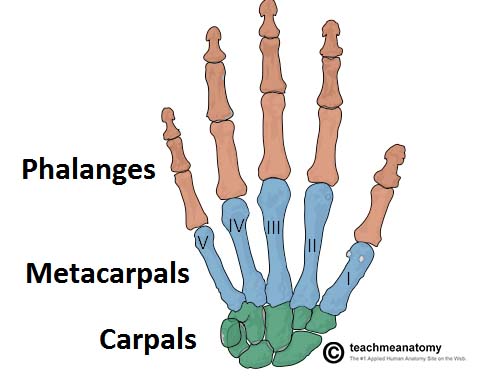
Back in the early 2000s (by which I mean 2000-2001) I worked as a nurse in the emergency department at our local university hospital. Among the injuries we saw on a semi-regular basis were adult men (and it was always men) presenting with a fracture of either the fourth or fifth metacarpal bones (sometimes both) and no other injuries.

what the fourth and fifth metacarpal bones might look like

This particular injury is known as a boxer’s fracture and results from, as one might guess, punching a hard, unyielding surface such as a human skull or, much more frequently, a wall.

In my mind it did not get much dumber than punching a wall. You start off with a bunch of problems, something makes you lose your temper and you punch a wall. Now you have all the same problems you had originally plus a fractured hand (and it was almost always their dominant hand because that’s the one people tend to throw the first punch with) and a bill for an ER visit on top of it.

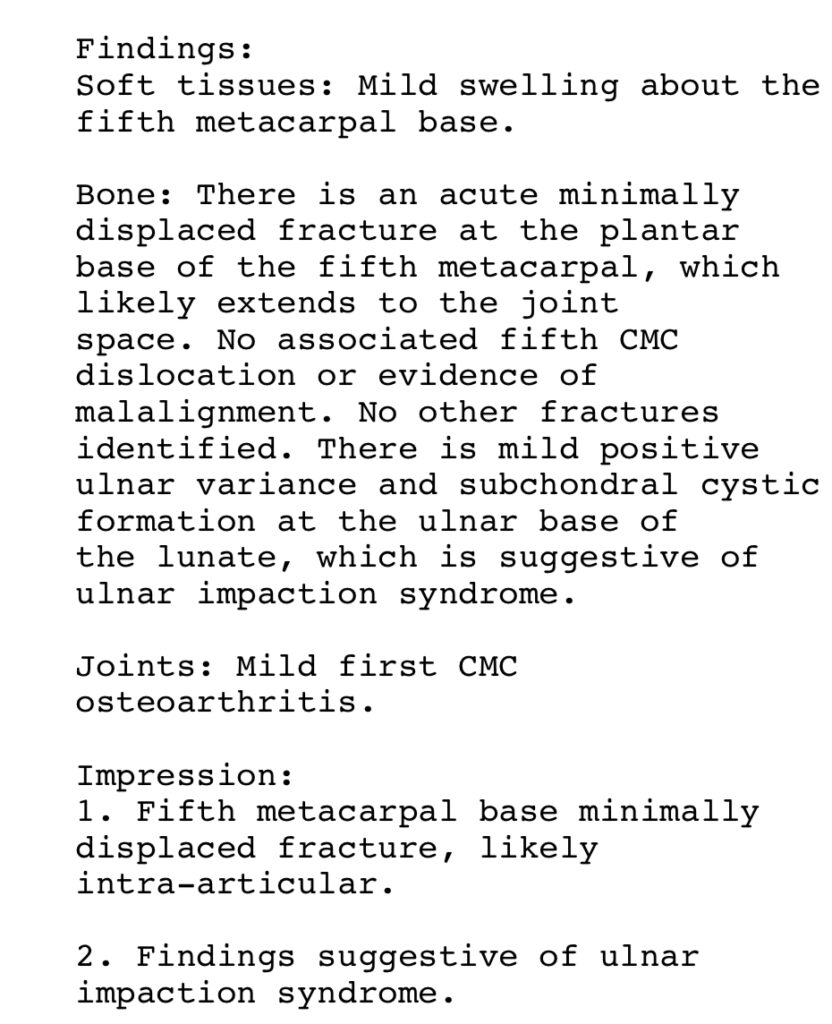
With that all said, this is how I spent my Thursday evening:

ulnar impaction syndrome is a degenerative joint disease similar to arthritis

I knew what I’d done as soon as I did it, although I did spend a couple of hours trying to pretend I didn’t.

So, as the man said, how did it come to this? The short(-ish) answer is that I am having an increasingly difficult time arguing that the PTSD-like symptoms that I’ve been having aren’t actually real1. The longer answer is that I really can’t point to anything specific. I’d been feeling off since the Tuesday of that week; more irritable, harder time concentrating, more than usual sleep disturbances, etc. and by Thursday afternoon I was moderately dysfunctional. I really can’t remember what I was doing right before. I was upstairs actively falling to pieces and went downstairs to try and get somewhere quiet. I went back to my office and then I was back out in the hall with a fractured hand.

I have to revise my opinion of at least some of the boxer’s fractures that came through the ER. This is, I think, a perfect example of that “toxic masculinity” you hear about these days. Men in America, certainly men around my age, were still acculturated into fairly traditional gender roles, especially when it comes to emotional intelligence. There comes a point where the only way one knows how to express and attempt to manage the intensity of emotions that one is experiencing is through violent rage because men have traditionally been actively discouraged from experiencing negative emotions in any other way.

I hope that others can maybe avoid these self-destructive patterns and learn a lesson from my experience.

And that lesson is: punch something softer than a wall.


1 This is not to say that my brain isn’t trying to tell me this is just an example of how serious I am about sloth and malingering; that I would go so far as to injure myself just so I could better fake mental health issues shows real dedication

In praise of 2-(2,6-dichlorophenylamino)-2-imidazoline hydrochloride

More commonly known as clonidine. Clonidine is an alpha-adrenergic agonist, and should not be confused with clonazepam (Klonopin) which is a benzodiazepine. As was previously mentioned, I had an appointment with Dr. Rando and among the things she recommended was adding a medication for anxiety to the antidepressant I’m already taking. Discussed options included benzodiazepines (which are not recommended for use in PTSD1), beta-blockers (which she was hesitant to put me on since I had been having issues with fatigue), prazosin (which is also an alpha blocker but is only indicated to treat nightmares associated with PTSD2), and clonidine.

TL; DR – I started on clonidine and I feel like it’s working really well. My baseline level of nervous system jangling has dropped noticeably. You are now safe to skip the rest of this post which consists of some rambling about how clonidine works, why I was positively enthusiastic to try it, and how irrational the distinction I have in my head between “psychiatric” medications and “physical” medications is.

My reaction to the suggestion of more medication highlights again my physical medicine bias. I resisted being on an antidepressant for a long time, and even after I started one initially my goal was to get off it as soon as possible (and then resisted going back on one when it looked like it was going to be required). However, when Dr. Rando suggested clonidine I was positively enthusiastic for a couple of different reasons. First, I am well familiar with clonidine. It was a mainstay medication for our ECMO program because it (at least theoretically) has beneficial effects on pain control, sedation, and blood pressure, it is available as a pill that can easily be crushed, dissolved, and put down a feeding tube if the patient can’t swallow, and, perhaps most importantly to the Powers-That-Be, it is dirt cheap. I understand how it works and, because I know how it works, I could see how it would help with the difficulties I have been having. The other reason I was enthusiastic to try it was the opportunity to see first hand if it really did work the way it was supposed to.

I want to talk a bit about exactly how irrational it is that I would resist adding, say, an SSRI to treat PTSD while not only accepting but being enthusiastic about trying clonidine. As I mentioned above, clonidine is an alpha-adrenergic agonist, which means that it inhibits some of the fight-flight-or-freeze response that our nervous system does when it feels threatened. In past times this response was a great adaptation because it allowed our progenitors to run away from saber-toothed tigers. In modern times it can be maladaptive because modern life is very good at creating stress that one can’t fight or run away from so the stimulation of our nervous system doesn’t turn off. Ever. The practical effect of using an alpha-blocker to moderate the activation of our nervous system is to reduce the hyper-alert state, resulting in improvement in tension and anxiety. Clonidine can do this by having the ability to cross the blood-brain barrier3 and by being structurally similar to norepinephrine, one of the main neurotransmitters in our nervous system. In terms of it’s mechanism of action, it is essentially indistinguishable from most medications that have primarily psychiatric indications.

Of course none of that matters to my brain. It’s a medication that I have used and am familiar with, and it has primarily physical indications which means it’s a real medication and not one of those woo-woo brain drugs (that work in extremely similar ways to achieve similar effects). Totally irrational.

This is one occasion on which I will not complain about my brain behaving irrationally. Whatever the reason I was able to persuade my brain that this was a necessity, I’m very pleased with how the medication is working so far. It has settled my nervous system sufficiently to make every day life a great deal less challenging.

There is more to catch up on but I am taking advantage of the reduction in mental clutter to enjoy doing things. What kind of things? Almost anything really. Even doing chores around the house is less troublesome when you aren’t spending an excessive amount of energy trying to keep from having a complete breakdown.


1 I’m not entirely sure why benzodiazepines aren’t indicated for PTSD. I suspect it has something to do with benzos having the potential to be disassociative which, based on my extremely limited understanding, is probably counterproductive.

2 I have no idea why one alpha blocker (prazosin) is only indicated to treat nightmares and another alpha blocker (clonidine) is indicated for general symptom treatment. Seriously, no clue.

3 I also don’t know enough about the blood-brain barrier to even attempt to explain it, so here’s Wikipedia.