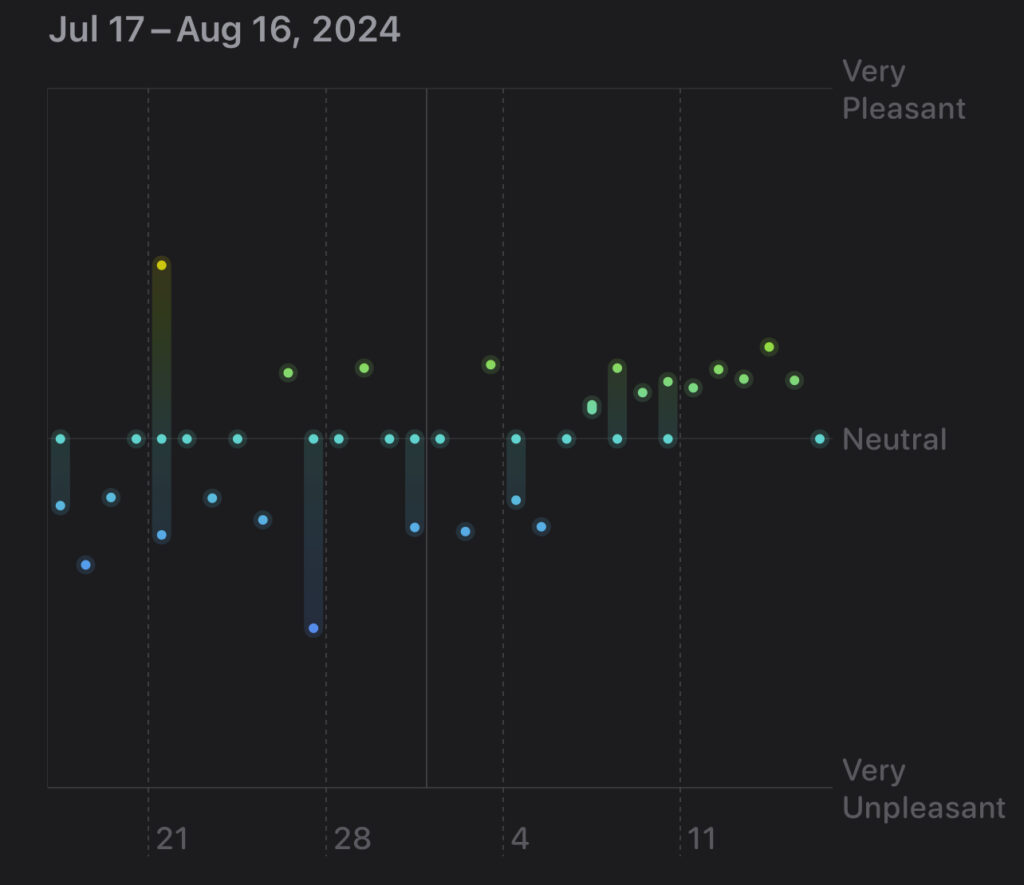
Inactive

The State of Washington requires 96 practice hours per year to maintain an RN license, a very low bar but one I am unlikely to get over this year. Fortunately (for a small, and ongoing fee, of course) I can put my license on “Inactive status” instead of just letting it expire. The reason for doing this is to avoid several layers of hoop-jumping should I be inclined to reactivate my license at some point in the future. If I reactivate it within three years, I wouldn’t even have to take a refresher course. Which I find frightening.

This will be the first time in 30 years that I haven’t had an active health care credential of some kind. I’m not sure how I feel about that.

Further Thoughts on Objective(?) Data(?)

Once again exposing some bias or another1 in my thinking, I assumed everyone knew what the PHQ-9, GAD-7, and PCL-C were and how they worked. I may have even explained here at some point. or maybe I didn’t…

Anyway, the point is, I want to give a quick explanation of what they are and how they work.

All three of these are screening tools for various mental health diagnoses. The Patient Health Questionnaire-9 (nine questions) and Generalized Anxiety Disorder-7 (seven questions) especially were designed for primary care providers to use to screen all their patients for depression and anxiety. The PCL-C2 is the civilian version of the PTSD screening tool developed by the military to screen troops. They rely on the frequency of symptoms like anhedonia, feelings of isolation or disconnection from others, nightmares, etc. as reported by patients. They were designed to be used by health care professionals and their patients in the setting of a therapeutic assessment. They were never intended to be self-administered, and certainly not self-interpreted. I am, in short, using them wrong3 and the numbers may or may not mean anything.

They’ve been scientifically validated and are relied upon by experts in the field so I’m more or less obligated to accept them as valid. When used as intended. I tend to have fairly concrete thinking when it comes to health care so having any kind of number to look at makes things easier. Whether or not the numbers are actually useful is a different question.


  1. I’ve never been clear on which of my many neuroses causes this to happen but for whatever reason I commonly assume that if I know something, everyone else must know it too. It was something I was consciously trying to change when I was working on my education degree and have, clearly, fallen out of the habit. ↩︎
  2. I’ll be honest, I have no idea what this stands for and I’m not going to bother to look it up. ↩︎
  3. Considering the disdain I hold for people who use the internet to diagnose themselves with various things, this may come off a bit hypocritical. I thread that needle in my mind by asserting my (still valid) credentials as a health care professional and that these are being used in the setting of receiving treatment for the relevant disorders. Hopefully I can swing a bit more nuance than someone lacking the appropriate organs diagnosing themselves with uterine fibroids. ↩︎

I’m Still Alive

Vicious circles are something I’m really good at. I’ve been feeling anti-social1, and I have a distorted view of my position in society which tells me if I’m not actively engaging, people tend to forget I exist2. This, of course, makes me feel even more anti-social.

On the up side, I do think my new combo med with dextromethorphan does seem to be helping with my generalized anxiety, and I continue to sleep reasonably well.

I suppose what this comes down to is another request to continue to bear with me, which I already know everyone will. Even if I don’t respond to texts, or comments, or phone calls, I read and appreciate the content. Not responding doesn’t mean I don’t care or I’m not paying attention, I’m just being Oscar the Grouch.


  1. Obligatory quote from St. Swithin’s Day by Grant Morrison – I’m not anti-social, society is anti-me. ↩︎
  2. This is not fishing for compliments. I’m aware people seem to think I have many redeeming qualities, the difficulty is I haven’t entirely persuaded my brain to believe it yet. This is a work in progress. ↩︎

Hey, Isn’t it an Election Year?

Alert readers may have noticed that, unlike previous incarnations of my blogery, news and politics have been absent from all three or four posts I’ve made since the latest resurrection. There are a couple of reasons for this.

First, anyone likely to be reading this also, likely, aligns closely with my own political views. “Preaching to the choir” is the applicable phrase here.

Second, as I believe I have mentioned previously, this is a really shitty time in history to have and anxiety disorder1. I have been something of a news junkie in the past but I just can’t handle this election cycle. In the past, not that long ago, worrying that a major-party candidate was going to engineer a coup if they didn’t win would have been the irrational anxiety, now it’s barely newsworthy.

I am aggressively trying to avoid the news. I am going to attempt to withhold comment except to say, if the country makes it through this election more or less unscathed I may have to rethink my opinion on the existence of the divine.


  1. To be fair, I can’t really think of a good time in history to have an anxiety disorder. Maybe April 11, 1954. ↩︎

Colorless Green Ideas Sleep Furiously

One of the bigger difficulties I’ve had with mental health medicine is, a good bit of the time I have no idea what those providing me advice and direction mean when they say things. Part of this is due to pop-psychology appropriating terminology and misusing it to the point of meaninglessness, and part of this is due to a large cognitive blind spot that seems to prevent me from parsing certain concepts.

I think the concept I have struggled most with, both in terms of time spent and results (or lack thereof) achieved, is the idea of “focus on the positive”. This has never made sense to me on what I think is a very basic level. All the words are common English words, the sentence is grammatically correct1, and yet I cannot figure out how it is supposed to be applied in the real world. It may as well be the sentence I stole to be the title of this post2. Or, more accurately maybe, its like looking at an Escher print. At a glance, everything looks okay but if someone told you to replicate it in three dimensions, you’d be hard pressed.

My trouble with the concept is not acknowledging the brief moments of happiness and joy that flit by occasionally, it’s with giving what I see as undue value and significance to them. I kind of see it like this3 – on one side of a balance scale, you have the core of a neutron star4. On the other side you have a pebble5. I have been assured that focusing on how much lighter the neutron star feels now that there is a pebble on the other side is the path to healing. I think my difficulty understanding how this is supposed to work in the real world is fairly self-evident.

Coming at this from a sightly different angle, my MHP has pointed out that I have a strong pattern of black-and-white thinking. Not a lot of grey area. Things are either all bad or not bad at all. If things are bad, they’ve always been bad. I can’t really disagree with him on this. Additionally, I have noticed in myself a tendency to rely heavily on avoidance and denial as coping mechanisms. These two traits combined, I think, explain the difficulty I have with the concept of “focus on the positive”. The pebble doesn’t fix the problem, and if you acknowledge the existence of the neutron star, then it’s there and you have to do something about it.

The trick, apparently, is learning to acknowledge the existence of the neutron star, while simultaneously being grateful for the pebble, even if it’s effect is negligible.

I’m not there yet.

Edited to add – The other difficulty I have with focusing on the positive is the challenge of being on fire and trying to focus on anything other than being on fire, but that’s a different post.
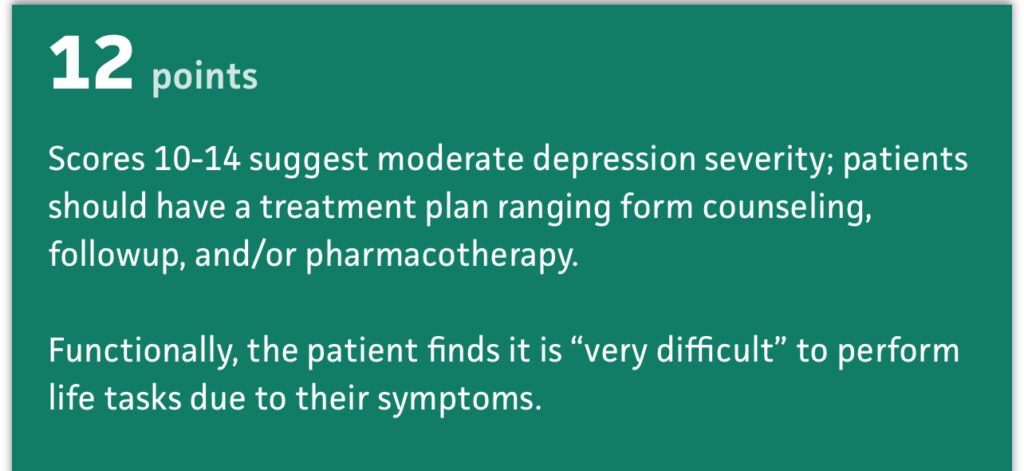
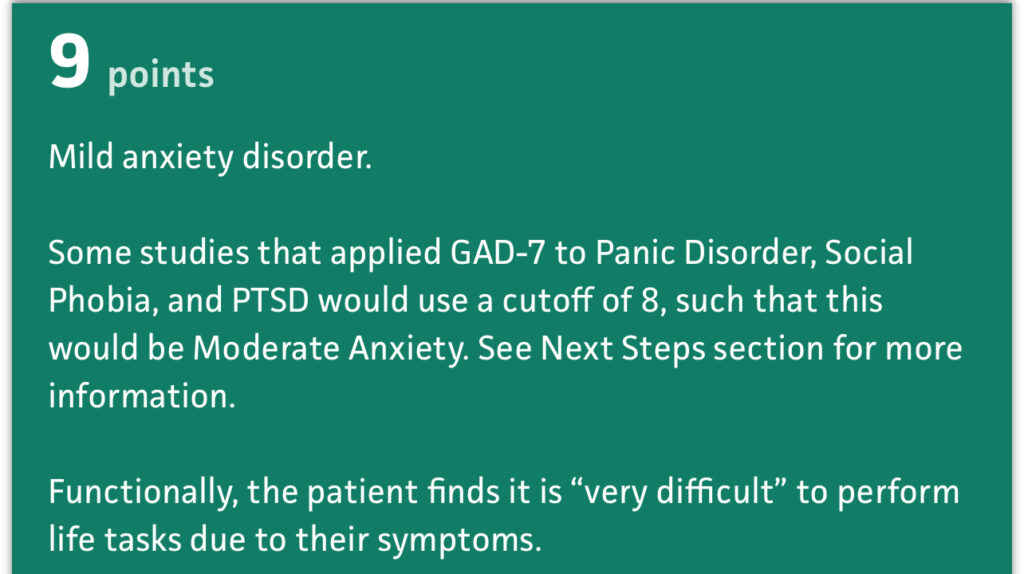
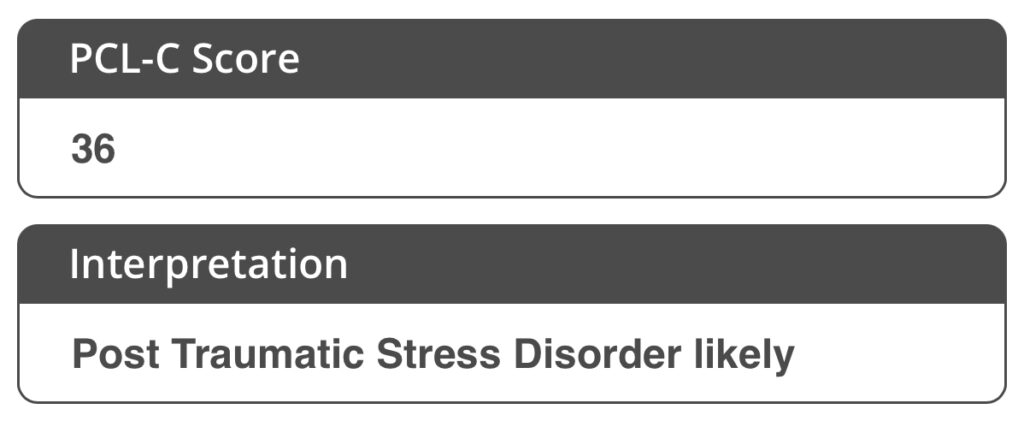
  1. Or, at least its close enough to not interfere with the meaning of the sentence. ↩︎
  2. Colorless green ideas sleep furiously was composed by Noam Chomsky in his 1957 book Syntactic Structures as an example of a sentence that is grammatically well-formed, but semantically nonsensical, demonstrating that language has a structure entirely separate from meaning. ↩︎
  3. I don’t know if these analogies help communicate anything meaningful but it’s the only way I can think of to try explaining what goes on in my alleged brain. ↩︎
  4. The typical neutron star weighs between 1.5 and 2 solar masses. 1 solar mass = 1.9891 x 1030 kilograms. ↩︎
  5. 1 cubic centimeter of pea gravel weighs approximately 1.8 grams ↩︎